
The complete agentic AI regulatory compliance operating system
FinregE captures every regulatory change, extracts the obligations that apply to you, maps them to your policies and controls, drafts the action plan, runs the tests, and logs the audit trail.
Backed by eight years of production AI, running on a data backbone we built before the hype. FinregE is the infrastructure trusted by regulators and global regulated institutions
Handbook Vendor
Investment
AI Research Grant
Multi-Award Winner
Production AI at Scale
Every regulation, policy and control traced end to end
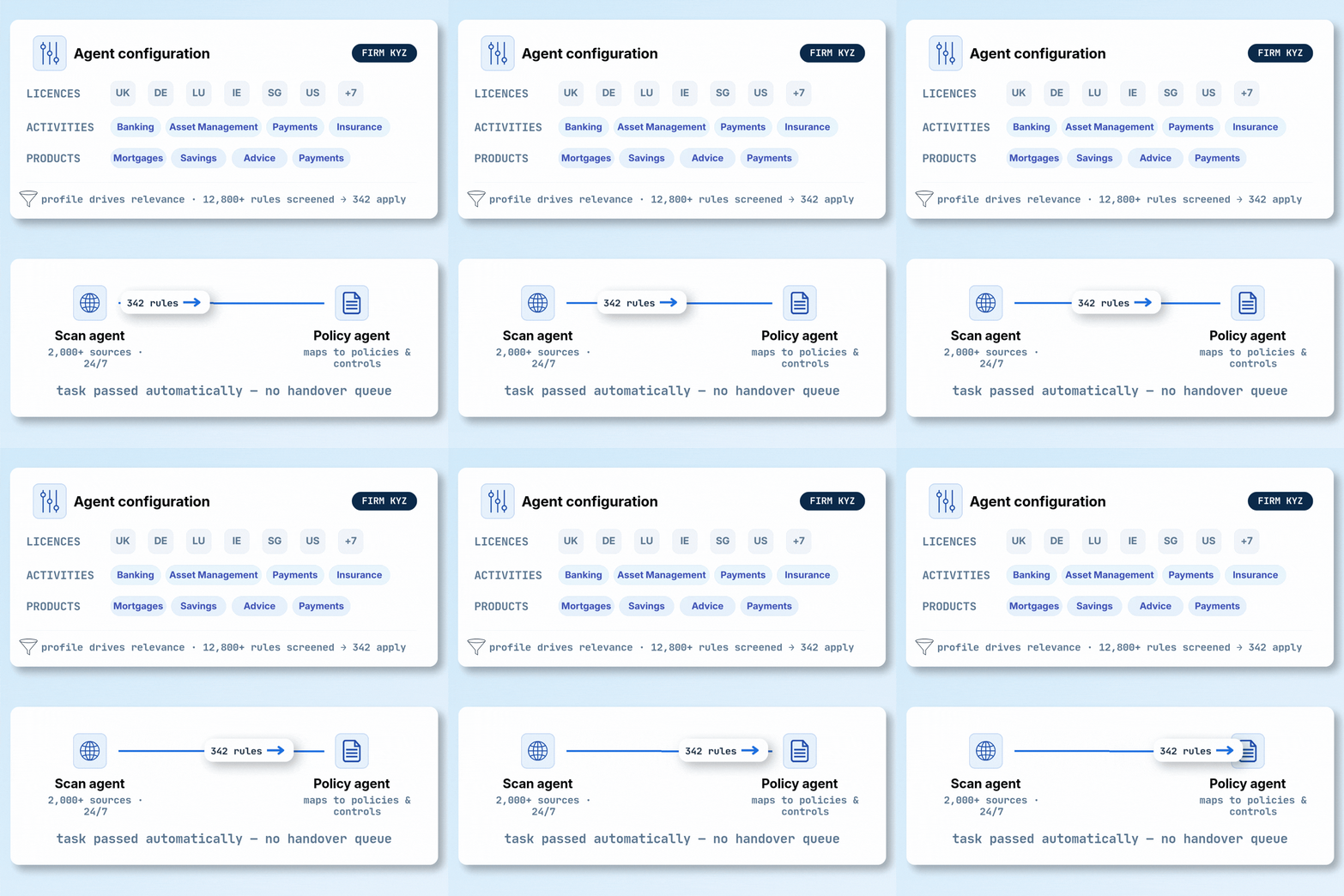
Regulations configured to your regulatory footprint
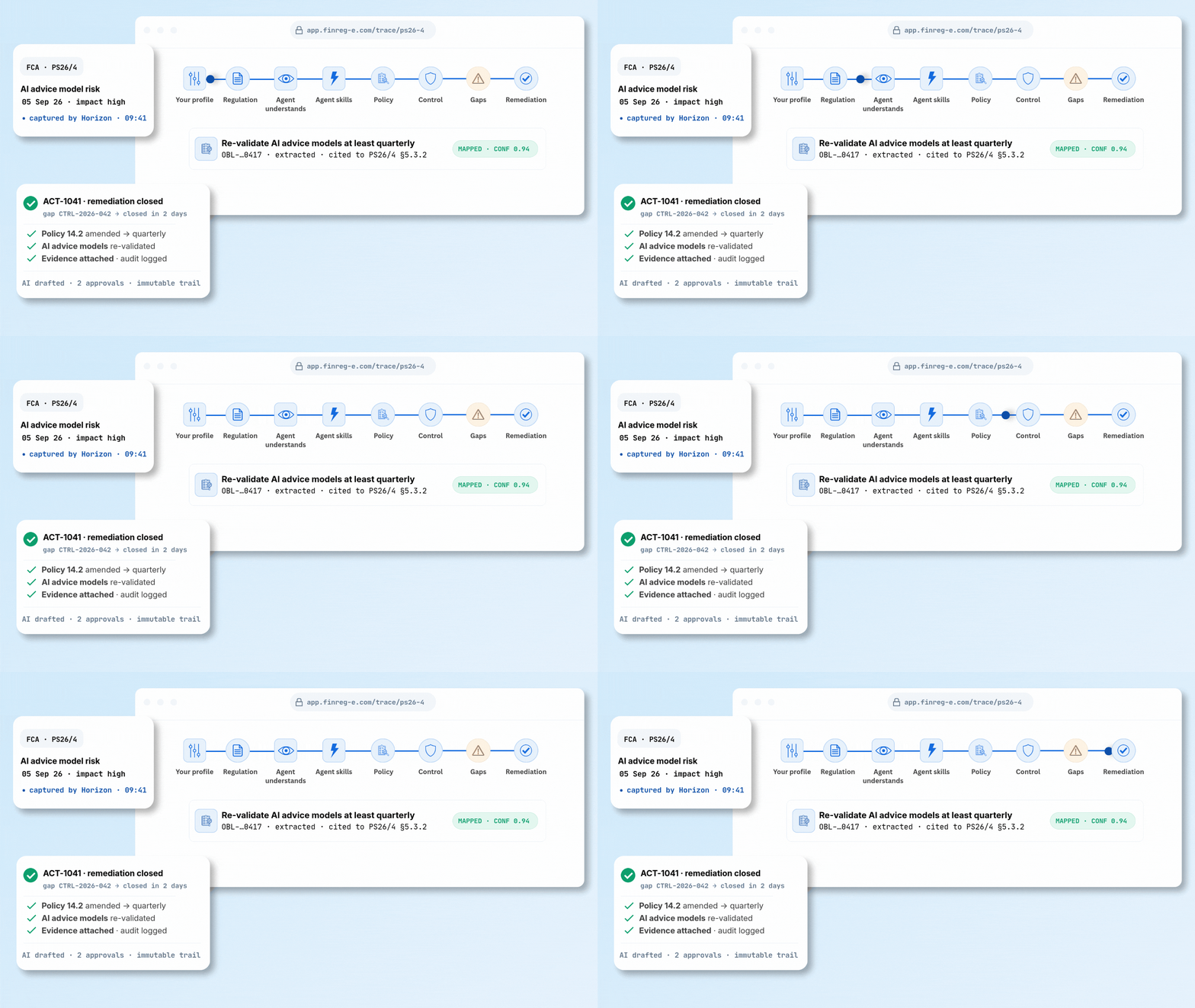
Complete compliance traceability
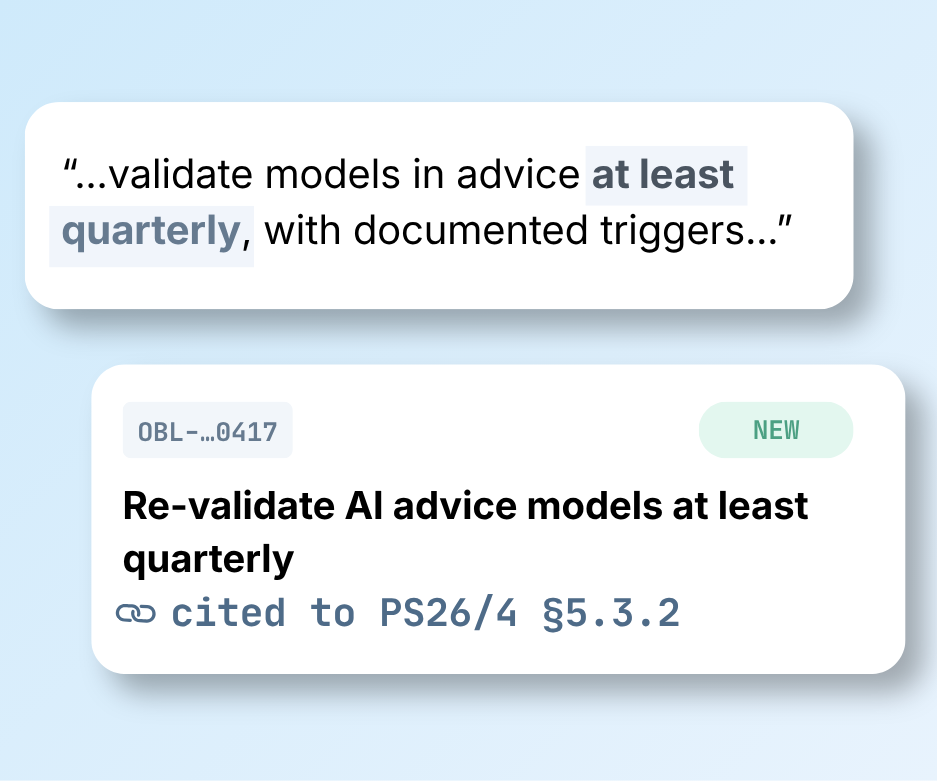
Regulatory obligations cited to source
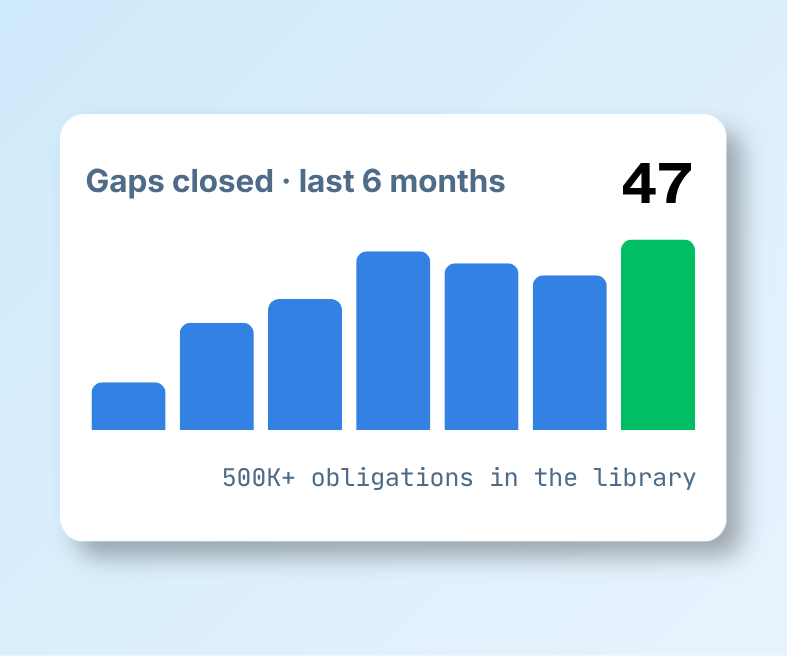
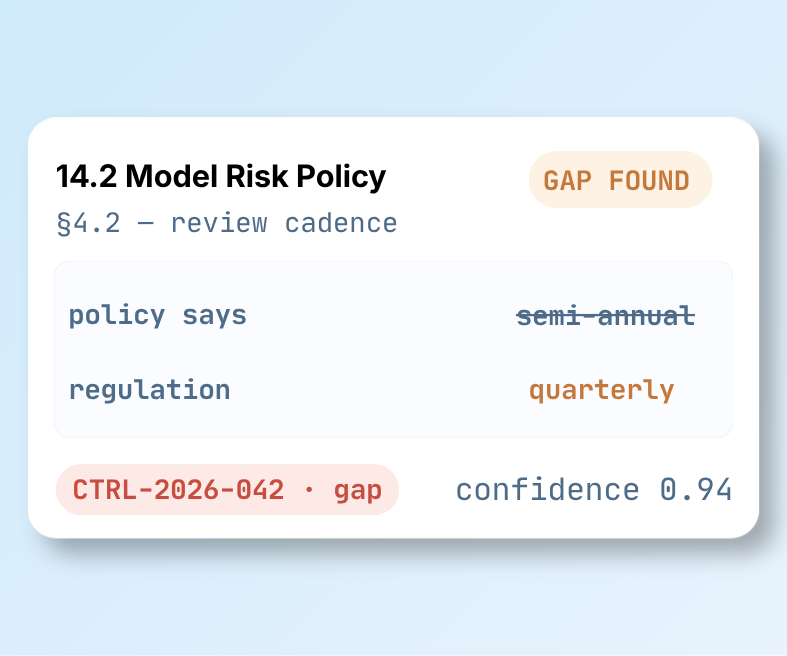
Controls gap analysis with recommended actions
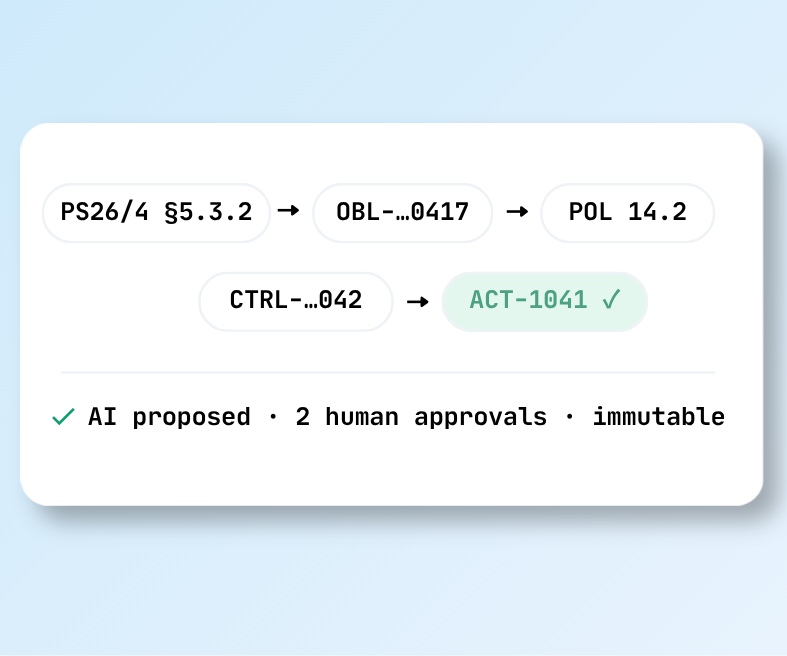
Every action step logged for audit
Same Team - 10x faster with a better output
FinregE reads every regulatory change, filters out what doesn’t apply to your firm, and drafts the impact assessment, policy updates and actions before your team logs on. People stop producing paperwork and start approving it, so headcount stays flat while output multiplies.
1
System for the whole journey
10x
Faster from change to action
The moment a rule changes, FinregE has parsed it, worked out what applies to you, mapped the impact to your policies and controls, and started the impact workflow. The action plan is on the owner’s desk to validate rather than perform.
100%
Of the workflow, auditable
Every task has a named owner. Every step has an audit trail tracked through an intuitive workflow. One-click dashboards and KPIs turn the whole trail into a live compliance scorecard that show you exactly how you complied.
Regulatory change arrives, gets filtered to what applies to you, maps to your policies and controls, turns into assigned actions and control tests, and leaves a complete audit trail behind it. All in one system – no disconnected tools.
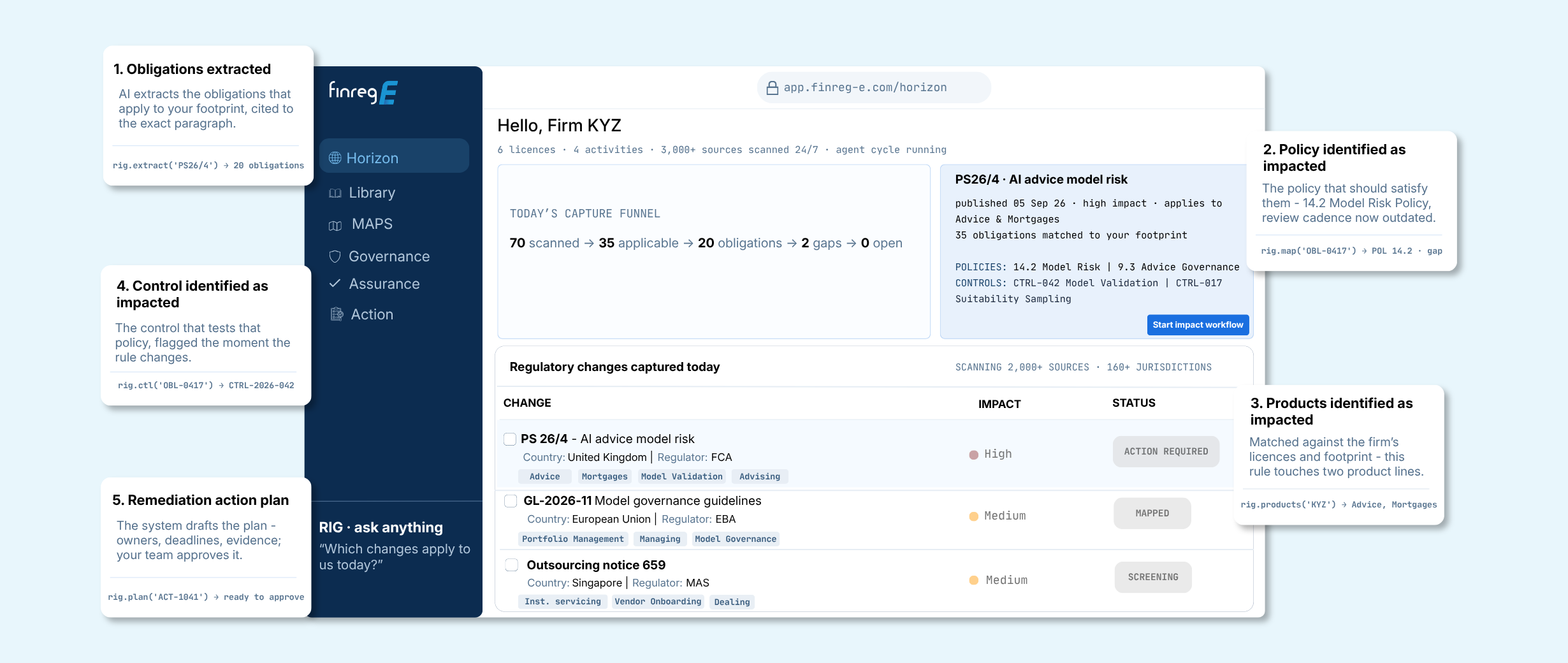
Six connected solutions. One operating system.
Each solution covers one stage of the compliance journey and all six run on the same structured data model with the same AI agents, so nothing is lost between scanning a rule and proving the control.
ingestion, scanning & regulatory change management
Monitor 3,000+ regulatory websites across 160+ countries continuously and get only the regulatory updates that matter to your firm, filtered by licence, products, topics, and services. AI RIG automatically extracts compliance obligations and required actions, turning raw regulatory change into a ready-to-execute action plan. Publish Reports deliver email alerts and regulatory newsletters to keep your whole organization informed.
the regulation Inventory & data engine
FinregE Library converts raw regulatory text into a structured inventory of laws and compliance obligations – each paired with policy and control recommendations that clarify what products, licence types or regulated activities a rule applies to and what actions are required to comply.
policy & control mapping with gap analysis
FinregE MAPs is a a structured, workflow-driven agent that connects every regulatory obligation across Horizon and Library regulations to the policies, processes, controls, and owners the obligation impacts, flagging gaps and areas for improvement. Because gap analysis re-runs automatically the moment a rule changes, you get a real-time view of your compliance posture, not a once-a-year project.
regulatory policy generation & management
Governance gives your firm one central library of every policy, procedure and standard. Search and query it in plain language with a domain-trained AI, see exactly which regulations each policy covers, and manage every update through built-in drafting, review and approval workflows, so policy governance runs as a controlled process, not a shared drive.
automated control testing & audit evidence
Manage risks, controls and testing in one place, with every control traceable to the rules and obligations that require it. Assurance runs a recurring compliance monitoring plan with each control tested at the required cadence. When rules change in Horizon, re-tests and alerts trigger automatically. Evidence is gathered as the work happens, so audit prep becomes an exported report.
remediation orchestration & workflow
Turn regulatory change, impact analysis and remediation plans into assigned, tracked work. FinregE’s enterprise workflows run across every module, from Horizon’s first flag to Assurance’s final test, putting an owner, a deadline and an SLA on every action. Gap closure becomes a tracked, evidenced workflow with live dashboards from a single action to firm-wide compliance status.
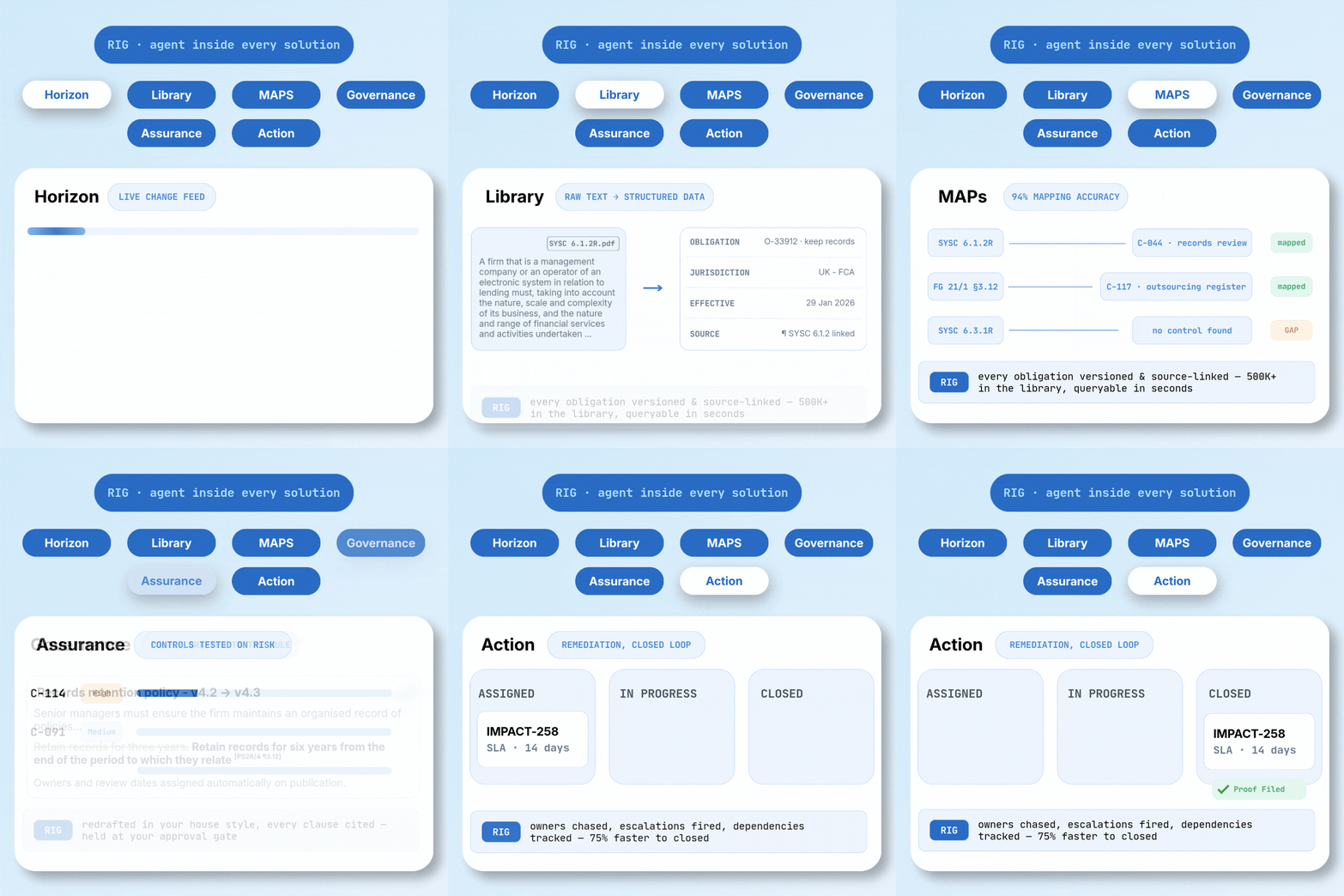
Ask anything. Across the whole suite.
RIG is a domain-trained AI, built on eight years of regulatory NLP and running on the structured data backbone, not a generic chatbot pointed at documents. Query regulations, obligations, controls, and gaps in plain language, and get cited answers with high accuracy, repeatability and relevance.

Connected to your regulatory stack. Rules flow in from 160+ jurisdictions; policy updates, control tests and remediation tasks flow back out. Open by design; MCP, APIs and pre-built connectors wire FinregE into your data, your agents and your workflows.
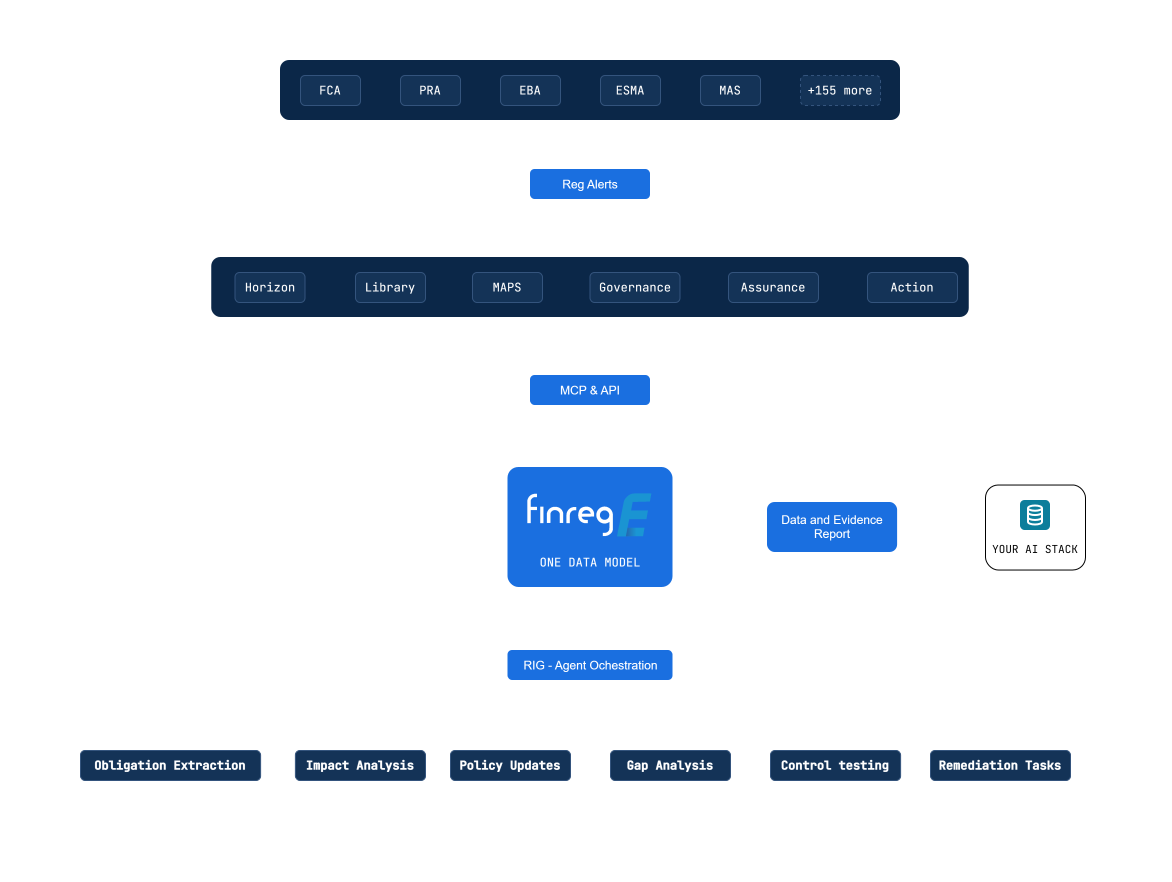
Great AI is a data problem.
Most “AI-powered” compliance tools point a chatbot at a pile of PDFs and call it done. Ours works because we did the unglamorous work first; ingesting, cleaning, structuring, and modelling regulations, laws, and internal documents like policies and controls for years. LLMs and agents are only as good as the data underneath them. Under ours is eight years of it.
8+ yrs
Production AI, not a pilot
FinregE was founded on one premise: use machine learning and NLP to turn regulatory text into structured, queryable data. We were building and shipping ML, NLP, and chatbots on regulatory content long before the current AI hype cycle, our AI has been in R&D, co-built with institutions, and in production longer than most of our competitors have existed.
- Founded on an ML / NLP / chatbot premise
- AI in production since 2018: 8+ years running
- Co-built with Imperial College under an Innovate UK AI grant
500K+
Structured obligations, not PDFs
Years of ingesting and structuring regulations and laws across 160+ jurisdictions have produced 500,000+ machine-readable obligations. Each is extracted with AI, verified by domain experts, versioned, source-linked, and connected to the obligations it amends, supersedes, or relates to.
- Every obligation traceable to its exact source paragraph
- Full version history and change lineage per rule
- Extraction models tuned on eight years of regulatory NLP
KGs
Knowledge graphs, not silos
We build the connectivity the raw text never shows: between regulations and their own versions and amendments, between licensing and permissions and the requirements they trigger, and between external rules and the internal documents, policies, procedures, controls, meant to satisfy them.
- Regulation ↔ regulation: versions, changes, supersedes
- Licensing & permissions mapped to requirements
- Internal policies and controls linked to external rules
94%
Mapping accuracy, human-verified
Our models don’t guess. They run on data that was already cleaned and structured by domain experts, then verified at every critical gate. The 94% mapping accuracy isn’t a benchmark we’re chasing , it’s what happens when AI queries a modelled knowledge base instead of raw text.
- Human-in-the-loop verification at critical gates
- Confidence score on every single mapping
- Errors feed back into the data model, not a black box
MCP
Plug the data into any agent, any model
The data model is stable, versioned, and exposed over MCP (Model Context Protocol), with RAG-ready context alongside. Connect your own LLMs, copilots, and agents to FinregE’s obligations and knowledge graphs as a first-class tool. Because the structure lives in the data layer, not the model layer, you can swap models or bring your own without the obligations changing.
- MCP server access on Enterprise plans
- RAG-ready context for your own models
- Model-agnostic: no retraining when the model changes
Understand. Act. Prove. One continuous flow.
AI agents do the production work; your people hold the approval gates. The same flow, every time a rule changes in any of your 160+ jurisdictions.
Understand
// what changed, and what it means for you //
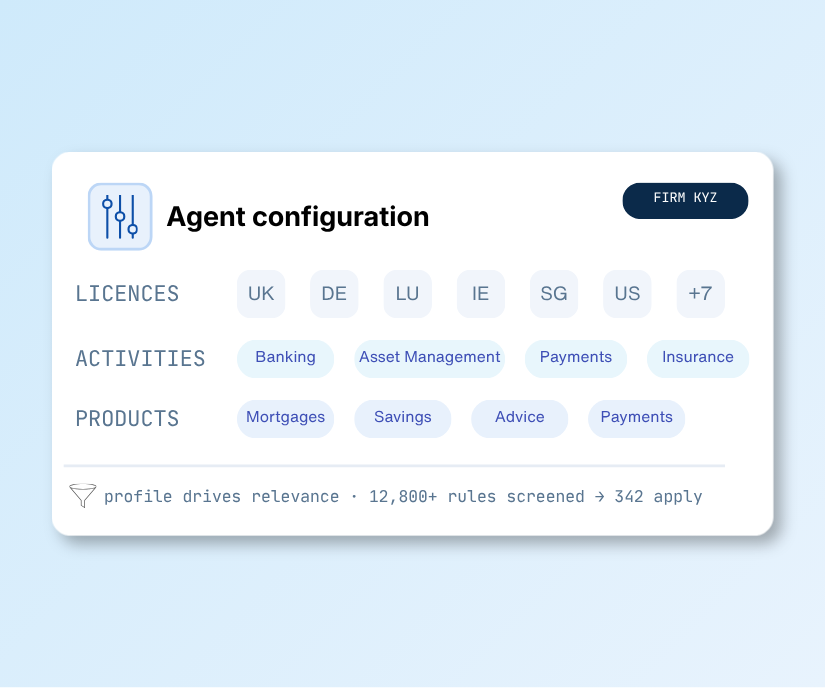
Horizon monitors 3,000+ regulatory websites 24/7 and, for every change, the AI works out what applies to your footprint. Library converts the regulation into clean, structured obligations, plain-language, source-linked, versioned. Ask RIG "does this apply to us?" and get a cited answer in seconds.
- 12,800+ regulations in the central library
- Obligations extracted automatically - what applies, and what action is required
- Impact workflow starts the moment relevance is confirmed
Obligations flow into your compliance map
Act
// what to change, who changes it, and how it gets done //
MAPs connects each obligation to the policies and controls it impacts and shows where you're compliant and where the gap is. Governance drafts the policy language directly from the obligation, and Action builds the complete plan to remove the gap, then the system makes it happen: accountability defined, tasks shared with owners, deadlines tracked, completion verified.
- 94% automated mapping accuracy, human-reviewed
- Action plans built to remove gaps and risks, not just flag them
- Every task has a named owner, a deadline, and an audit entry
Completed work feeds continuous assurance
Prove
// that it was done, and it stays done //
Assurance re-tests controls continuously against your risk profile, not a fixed calendar, so high-risk controls get tested more, low-risk ones less. Evidence is collected as work happens, and the whole loop closes with an auditor-grade record. When an examiner asks, the answer is already assembled.
- Compliance monitoring scheduled to your risk profile
- Evidence auto-collected, no year-end scramble
- Board-ready reporting and a full decision audit trail
One platform. Three ways to run it.
Every tier includes the full platform, all six solutions and RIG. You scale by regulatory footprint, not by seat count.
Scale
Single-entity firms and mid-sized institutions
Fixed monthly · no per-seat fees
✔ Pick your solutions+ RIG, single jurisdiction cluster
✔ Up to 25 regulatory frameworks
✔ Grow into solutions at your pace
✔ Standard audit report export
✔ Email + chat support
Enterprise
Multi-entity, multi-jurisdiction institutions
Scoped by entities, jurisdictions & frameworks
✔ Everything in Scale, plus
✔ 160+ jurisdiction monitoring coverage
✔ Group-level consolidation & reporting
✔ MCP server + API access to the compliance data model
✔ SSO, RBAC, full decision audit log
✔ Named solutions architect
Regulator
Supervisory bodies & standard-setters
Built for rule lifecycle management
✔ Handbook authoring & public publishing
✔ Automated impact analysis for consultees
✔ Supervision data models
✔ On-prem or dedicated-cloud deployment
✔ Government-grade security review
Questions compliance leaders ask us first.
Why is your AI more trustworthy than other "AI-powered" compliance tools?
Because we built the data first. Most vendors point a large model at PDFs and hope for the best. We spent eight years ingesting, cleaning, structuring, and modelling regulations, laws, and internal documents into knowledge graphs before the current AI hype cycle existed. Our agents query 500K+ structured obligations each source-linked, versioned, and expert-verified, instead of guessing from raw text. That’s why our mapping holds at 94% accuracy, and why our answers cite the exact paragraph they came from.
How long has FinregE's AI actually been in production?
Over eight years. The company was founded in 2018 on the premise of using machine learning, NLP, and chatbots to turn regulatory text into structured, usable data and that AI went straight into R&D, co-buildin, and production. It was developed in collaboration with Imperial College under an Innovate UK AI grant. So when other vendors are now “adding AI”, we’re in year eight of running it, past the hype cycle, and past the pilot phase.
What exactly is in the "data backbone"?
Three layers. First, a structured obligation model: 500K+ obligations extracted from 12,800+ regulations across 160+ jurisdictions, each source-linked to the exact paragraph and versioned through every amendment. Second, knowledge graphs: the connectivity between regulations and their own versions and changes, between licensing and permissions and the requirements they trigger, and between external rules and your internal policies and controls. Third, extraction and mapping intelligence: the models that turn new regulatory text into usable obligations and connect them to your compliance map, trained and tuned on eight years of regulatory NLP.
How is this different from their GRC platform or the point tools we already have?
GRC platforms store what you enter, they don’t tell you what to enter, or what you’ve missed. Horizon, libraries, mapping, action plans, testing, and workflow are all connected in one system: AI does the production work of moving a regulation from “published” to “control proven”, and humans hold the approval gates. Many customers connect FinregE to their existing GRC via API; others replace it entirely. In the demo we map how it fits your current stack.
What is RIG, and how is it different from a chatbot?
RIG is a domain-trained AI embedded throughout the suite and not a generic chatbot pointed at documents. It answers from the structured obligation model and cites the exact paragraph. When you ask “does PS26/4 apply to us?”, RIG reasons over the knowledge graph (versions, applicability, your footprint) and shows its sources. Every consequential action it drafts still goes through a human approval workflow, which the audit trail records.
Who does the work, the AI or their team?
The AI does the production work: monitoring, parsing, obligation extraction, mapping, drafting, testing, and orchestration. Your people hold the decisions: reviewing mappings, approving policy changes, closing controls, and owning the tasks workflows assign to them. No human is doing manual research or data entry on the critical path and no consequential decision is made without an accountable human sign-off, which the workflow captures.
How do we trust automated decisions on regulated matters?
Explainability is structural, not aspirational. Every obligation links to the exact source paragraph; every mapping carries a confidence score; every automated decision is written to an immutable audit log. Human approval gates sit at mapping, drafting, and closure, the AI proposes, your team disposes, and examiners can pull the full decision trail in one place.
How long does implementation take?
Most customers see their first obligations and mappings within days of connecting their regulatory footprint. A full rollout with your policies, controls, testing schedules, workflows, and your team trained on the platform, typically completes in 8–12 weeks, versus 12–18 months for a manual build across multiple tools.
Can we use the data model with our own AI stack?
Yes, that’s the architecture’s intent. Enterprise plans include an MCP (Model Context Protocol) server plus API access to the regulatory data model, with a stable schema and RAG-ready context. Your own LLMs, copilots, and agents can query FinregE’s structured obligations and knowledge graphs as a first-class tool. Because the structure lives in the data layer, you can swap or bring your own models without the obligations changing. Many customers run both: our agents for the operational lifecycle, our data for their own AI initiatives.
What is regulatory change management software?
Regulatory change management software monitors regulatory sources for new and amended rules, works out which changes apply to your organisation, and turns them into tracked actions. FinregE’s Horizon agent monitors 2,000+ sources across 160+ jurisdictions, and for every relevant change it starts an impact workflow automatically, so change management stops being a manual research job and becomes a managed pipeline.
How do we automate regulatory gap analysis?
You need structured obligations and a structured map of your policies and controls, then the matching runs itself. FinregE’s MAPs agent connects each extracted obligation to the policies and controls that should satisfy it at 94% accuracy, shows exactly where you’re compliant and where the gap is, with confidence scores and source citations and re-runs automatically whenever a rule changes.
What is a regulation database for financial services?
A regulation database is a central, structured store of the regulations and laws that apply to your firm which is searchable, current, versioned, and linked to the exact source. FinregE’s libraries hold 12,800+ regulations with 500K+ obligations extracted by AI: not just the raw text, but what applies to you and what action is required, so it doubles as both a regulation database and a regulatory research platform in one.
Client Testimonials & Independent Industry Analysis
FinTech Finance News
“FinregE is clearly moving the needle by shifting the conversation from “AI as a tool” to AI as infrastructure. While many RegTechs focus on niche reporting, FinregE’s AI-native operating system approach addresses the root cause of compliance failure: fragmented data. FinregE is becoming the de facto standard for digital-first regulatory management.”
Global Tier 1 insurance company
“FinregE acts more like a strategic technology partner than simply another technology vendor. The team really try to understand the compliance problem we are trying to solve and train and configure their software to meet our existing processes and teams and businesses enterprise set-up.”
Global legal professional services firm
“Many providers can provide you with a data feed on regulators developments that is either delayed, missing relevant updates or sources of information or the publications are unstructured and uncategorised. With FinregE, you get a fully customised, consistently structured and fully topic tagged data feed on regulatory developments across global sources. What has also been useful is being able to get access to this data via customised APIs and filtering based on our needs and requirements.”
UK Tier 3 payment services firm
“With FinregE, the biggest benefit to us has been reducing the manual effort and time taken for us to manage numerous messy email subscriptions and RSS feeds to keep on top of regulatory changes, as FinregE brings all the information we need to us in their platform.”